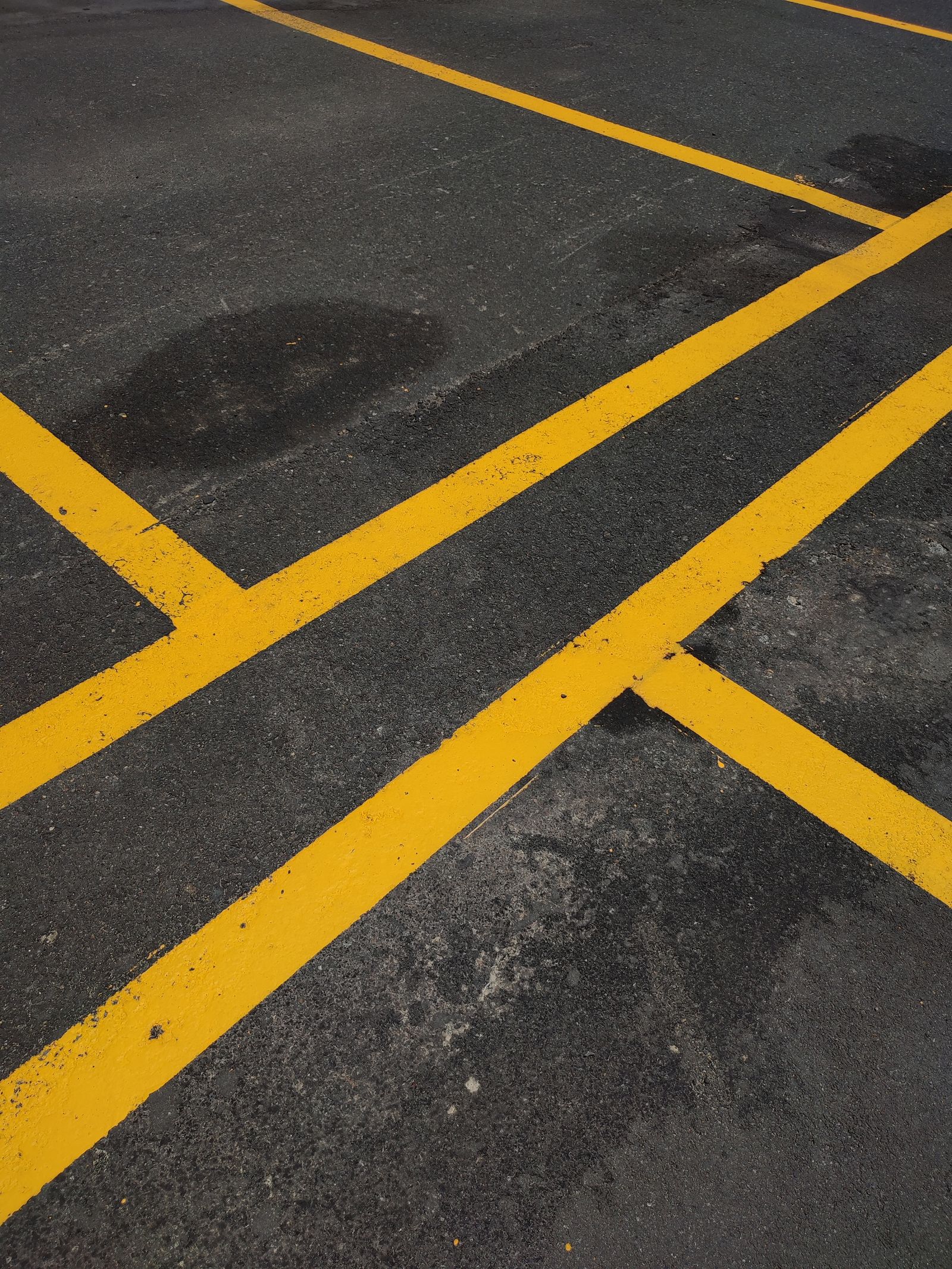
OSHA expects marked aisles
OSHA's walking-working surfaces and materials-handling rules (29 CFR 1910.176) require permanent aisles and passageways to be appropriately marked. Yellow aisle and pedestrian-lane striping is the standard way warehouses demonstrate it, and it's the first thing an inspector looks down at.
Warehouse line marking in Baltimore
The US-1 corridor we work from feeds straight into the city, and warehouse line marking in Baltimore is a regular run for us: distribution space near the Port, older brick warehouses being refit for new tenants, and the box parks along I-95 south of town. City jobs get the same scope, aisles, pedestrian lanes, forklift routes, and staging zones, with off-shift scheduling because Baltimore docks rarely sit idle. We wrote up the city work in detail, costs and slab types included, in [warehouse line marking in Baltimore](/articles/warehouse-line-marking-baltimore).
Warehouse line painting in Frederick
Frederick is the regular westbound run: the distribution parks off I-70 and US-15 are mostly new tilt-up, so warehouse line painting in Frederick is usually a first-time layout on a clean slab, measured and chalked from your racking plan and finished in a weekend shutdown. New floors get a moisture test before any paint goes down, because a months-old slab can be at full strength and still too wet to hold a line. Costs, slab testing and the weekend sequence are written up in [warehouse line painting in Frederick](/articles/warehouse-line-painting-frederick-md).
Warehouse line marking in Rockville and Montgomery County
Warehouse line marking in Rockville runs on the I-270 corridor's flex and lab-adjacent buildings, which means smaller footprints, more pedestrian lanes and keep-clear zones per square foot, and tenants who cannot shut down for long. We phase those floors section by section on nights and weekends from the Howard County base, about 40 minutes down I-70 and I-270, and the same crew handles Gaithersburg, Germantown and the Shady Grove industrial pockets on the same trip. Send the floor plan and the quote comes back for the whole building, not a per-visit rate.
Warehouse line painting across the DMV
On the Maryland side of the DMV we cover the full loop: Laurel, Beltsville and Landover along the Beltway, Rockville and Gaithersburg up I-270, and the Jessup and Elkridge base in between. Northern Virginia floors, Springfield and the I-95 corridor included, are quoted case by case rather than turned away; if the scope is a full building layout or an epoxy aisle system, the trip usually pens out, and we say so up front either way. Wherever the building sits, the scope is the same marked aisles, pedestrian lanes, forklift routes and staging zones, and the number comes off the floor plan.
Warehouse line painting, priced by the floor
If you searched for warehouse line painting instead of striping, you're in the right place, it's the same service. Pricing runs on the floor, not the name: square footage of layout, paint system (traffic paint versus epoxy), and how much surface prep the slab needs. Send a floor plan and we'll quote it, from a single re-marked aisle in Baltimore to a full building layout in Frederick.
Layout for how the building actually runs
Forklift routes, one-way aisles, pedestrian lanes with crossing points, staging and quarantine zones, dock approach markings, and rack footprints, all planned around your racking and your traffic rather than a generic template.
Paint that survives forklifts
Concrete gets surface prep and coatings chosen for wheel traffic and cleaning regimes. Options run from high-build traffic paint for speed to epoxy systems for durability, quoted honestly by expected wear.
Nights, weekends, and around your shifts
Floor striping phases around operations: section by section, off-shift, or over a weekend shutdown. Cure windows are planned so the first forklift never meets wet paint.
Warehouse Floor Striping FAQ
Is warehouse line painting the same as floor striping?+
Same service, different names. Warehouse line painting, line marking, aisle marking, and floor striping all describe painting durable layout lines on a warehouse floor. Whatever you call it, the scope is the same: aisles, pedestrian lanes, forklift routes, and zones, and we quote it from a floor plan or a walkthrough anywhere from Baltimore to Frederick.
What do the standard warehouse floor colors mean?+
Common practice: yellow for aisles and traffic lanes, white for equipment and rack locations, red for fire equipment and keep-clear zones, and photoluminescent or green for egress paths. We follow your safety plan's legend or help you set one.
How wide should warehouse aisles be marked?+
Wide enough for the equipment plus clearance, commonly at least the forklift width plus three feet, with separate pedestrian lanes of three to four feet. Racking, door swings, and two-way traffic set the real number; we measure before we mark.
Paint or tape for warehouse floors?+
Paint and epoxy last far longer under forklift wheels and floor scrubbers; tape is quick but lifts at the edges and becomes debris. We use durable coatings for permanent layout and reserve tape for genuinely temporary zones.
How much downtime does floor striping take?+
Sections can often be prepped, striped, and cured in an overnight window, and a full small warehouse over a weekend. We phase around receiving schedules so operations never fully stop.